Growing with IPv6

Broadband Command Center (BCC) has more than 20 years of development with many useful features in the GUIs, service side code, and CLIs. Over the last 10 years, I have watched the IPv6 side of BCC grow, becoming more useful to industry needs. With IPv6 we had to be ready for new and different ideas, like a device having many addresses or prefix delegates, and how would we show this in a readable manner? How would we make it easier to figure out what was happening on a busy IPv6 DHCP server?
Of course, the IPv4 side of BCC had more time to mature, and the last GUI iteration, the JIMC, was the start of our IPv6 life. The obvious choice is to try to repeat things that worked in IPv4 in IPv6, but there are irreconcilable differences we should not ignore. One quick win was to add DHCPv6 releases at log level 0. There are many times we want to see what a busy DHCP is doing, with hundreds of discovers and solicits going by per minute.
Another growth in IPv6 came with some of you needing to have many more routing elements than with IPv4. DHCP became slow at startup figuring out the relationships between these many routes. This was added in DHCP 7.1.10.2/8.0.1.16 taking the startup time from minutes to seconds for 1500+ Routing Elements.
A terrific addition to DHCPv6 criteria was adding the Link Address, or the GIADDR (gateway IP address) for DHCPv6 as a criterion to choose from. There are examples where Operators want to send different DHCPv6 options between rules, for example, CCAP-cores.
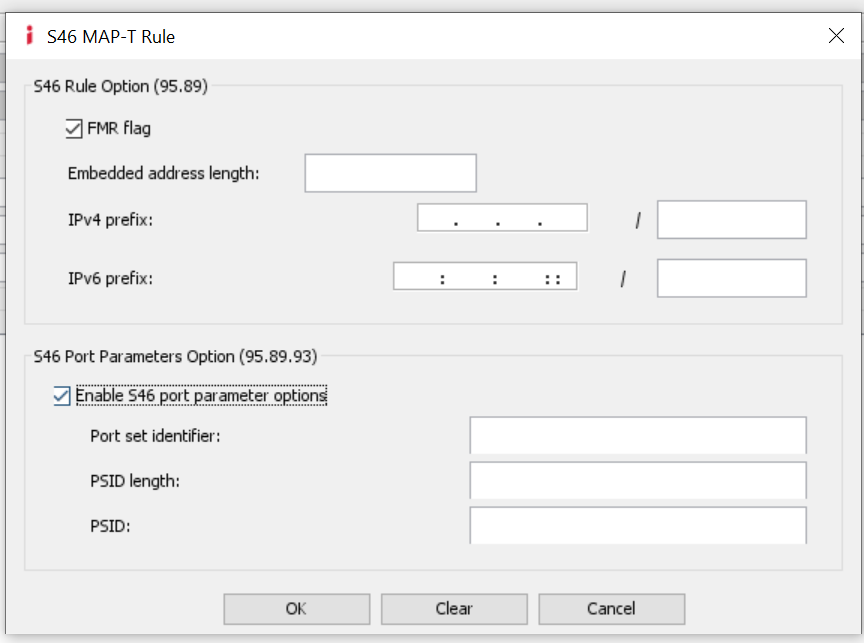
Something that was available but difficult to configure is MAP-T settings. Of course, if you knew the exact string to send, one could send the TLV in DHCPv6 opt 95. However, things can get complicated quickly and the GUI makes it much easier to manage.
All this is leading up to changes that are coming for DHCPv6 in BCC as well. We’ve heard from some of you about items that would help soon. Some of these are being planned, and some are being worked on for releases due soon. Look back to the release notes for exciting new DHCPv6 features soon.
Por favor, entrar para comentar.

Comentários
0 comentário